Booking a limo or chauffeur in the UK
Stretch Limo Passenger Limits and Vehicles with 9 or More Seats
8 November 2026

In UK licensing, the important number for a stretch limousine is 8. A limousine with up to 8 passenger seats comes under the private hire rules. A limousine that carries 9 or more passengers for hire or reward is treated as a public service vehicle, and the operator needs a PSV operator licence from the traffic commissioner.
Quick answer: A stretch limousine with 9 or more passenger seats, used for hire or reward, needs a public service vehicle (PSV) operator licence from the traffic commissioner, and its driver needs a category D1 or D entitlement. Limousines with up to 8 passenger seats come under private hire licensing, run by councils and TfL. Each passenger needs their own seat, and must wear a seat belt where one is fitted.
Key Takeaways
Up to 8 passenger seats: private hire licensing, through the council or TfL.
9 or more passengers for hire or reward: a PSV operator licence from the traffic commissioner.
The driver of a larger limousine needs a category D1 or D entitlement, not just a car licence.
Stretched limousines must have Individual Vehicle Approval, or a COIF if built before 29 July 2011.
Only one person is allowed in each seat fitted with a seat belt.
Where the line falls
GOV.UK's limousine licensing page sets out the split. Small limousines, seating up to 8 passengers, need a private hire vehicle operator licence. Large limousines, seating 9 passengers or more, need a public service vehicle (PSV) operator licence.
The guidance for stretch limousine operators linked from that page uses the same split. It calls vehicles with 8 or fewer passenger seats small and those with more than 8 large, and says only vehicles built or adapted to seat fewer than 9 passengers can be licensed as private hire vehicles.
Up to 8 passenger seats | 9 or more passenger seats | |
|---|---|---|
Licensing system | Private hire | Public service vehicle (PSV) |
Who licenses the operator | Council, or TfL in London | Traffic commissioner |
Driver's licence | Full car licence (category B), plus a private hire driver licence if it's licensed as a private hire vehicle | Category D1 or D |
Wedding and funeral exemption | Yes | No |
The PSV operator licence
GOV.UK says you need a PSV operator licence to operate a vehicle for hire or reward that can carry 9 or more passengers. Hire or reward means payment or payment in kind, so it covers the usual way a limousine is booked and paid for.
The operator guidance adds that the licence is granted by the traffic commissioner. To get one, an operator has to show it's of good repute, has appropriate financial standing and has proper arrangements for maintaining its vehicles. Our guide on how to check a limo company is licensed shows how to look up a PSV operator on GOV.UK.
The driver's licence
According to the operator guidance, the driver of a small limousine needs a full car (category B) licence, as long as the vehicle doesn't exceed 3.5 tonnes. If the limousine is licensed as a private hire vehicle, the driver also needs a licence from the same authority.
For a large limousine used as a PSV, the driver needs a category D1 or D entitlement if there are 16 or fewer passenger seats, and category D if there are 17 or more. So it's reasonable to ask a firm whether its driver holds the right category for the vehicle you're booking.
Seats and seat belts
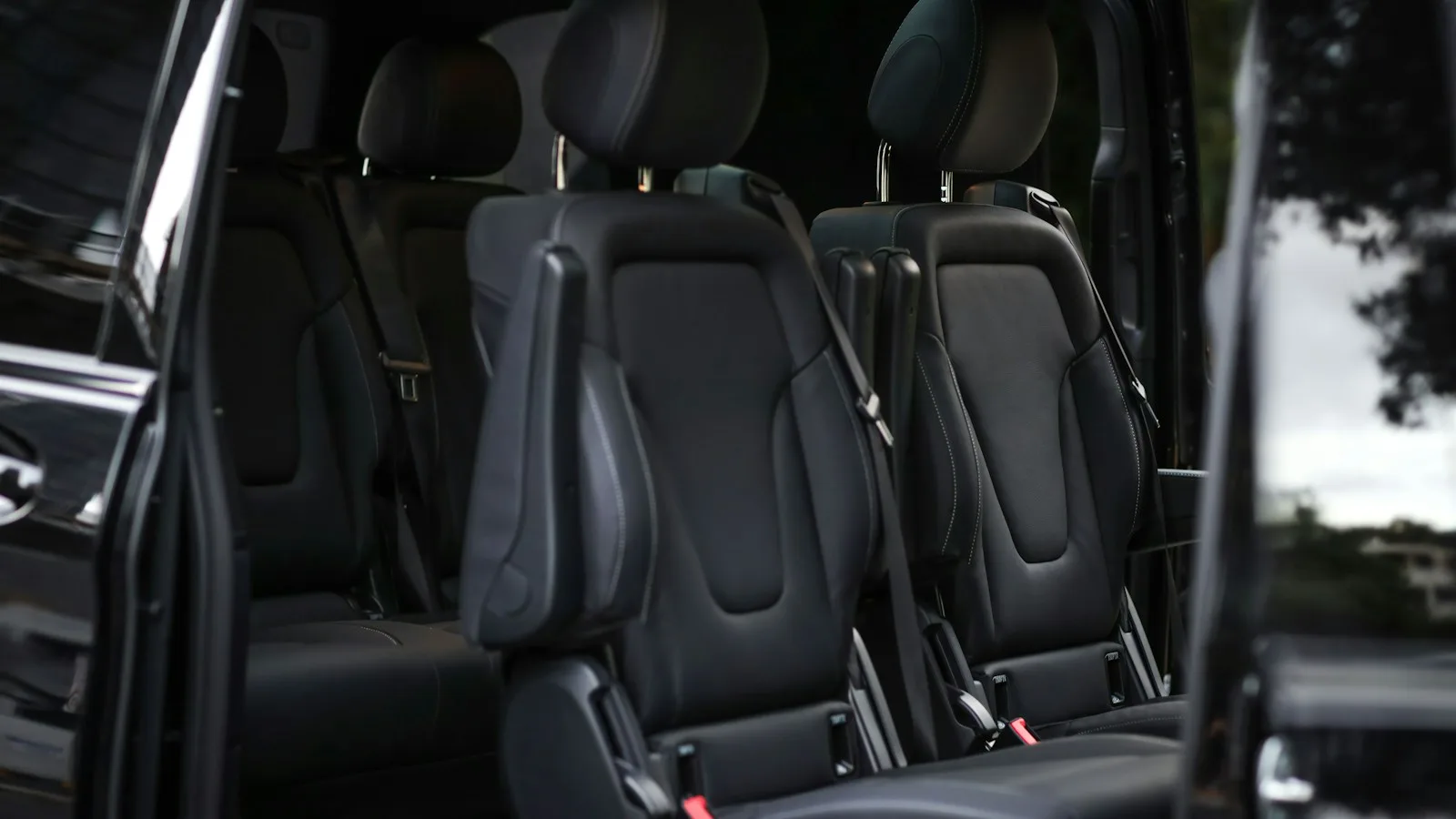
GOV.UK's seat belt rules say you must wear a seat belt if one is fitted in the seat you're using, with only a few exceptions, and that only one person is allowed in each seat fitted with a seat belt. A booking for more people than there are seats isn't something to agree to.
Many stretch limousines have sideways-facing seats. The operator guidance notes that there's no legal requirement to fit seat belts to sideways-facing seats, and that there are no seat belts or child restraints approved for them. A child who needs a child restraint, meaning anyone under 135 cm tall who's also under 12, can't travel in a sideways-facing seat.
Vehicle approval
GOV.UK says stretched limousines must have Individual Vehicle Approval (IVA) to be registered and licensed. For those built before 29 July 2011, a Certificate of Initial Fitness (COIF) is accepted. The operator guidance explains that many limousines are converted or imported and need changes to meet GB rules, which is why this approval matters.
The wedding exemption stops at 8
GOV.UK says limousines with up to 8 passenger seats don't need a licence for weddings and funerals. That exemption doesn't reach the larger vehicles, so a limousine carrying 9 or more passengers for hire or reward needs a PSV operator licence whatever the occasion. Our wedding car hire guide covers the other things to check for a wedding booking.
Before you book a large limousine
Ask how many passengers the vehicle is licensed to carry, and make sure everyone in your group has a seat.
Ask for the firm's PSV operator licence number and check it on GOV.UK.
Ask whether the driver holds a category D1 or D entitlement.
Ask which seats have seat belts, especially if children are travelling.
Get the details in writing before you pay.
For prom bookings, where groups are often large, see our guide to prom limo hire.
For the wider picture, read limo hire rules explained.
Is a party bus treated the same way?
The PSV rule isn't limited to limousines. GOV.UK says a PSV operator licence is needed to operate any vehicle that can carry 9 or more passengers for hire or reward.
Can a firm hire me the vehicle and the driver separately?
GOV.UK says operators hiring out limousines and drivers separately to avoid licensing are breaking the law.
Can more people travel than there are seats?
GOV.UK says only one person is allowed in each seat fitted with a seat belt, and you must wear a seat belt if one is fitted in your seat.